This exercise was made by AI and has not been reviewed by a person. How it is made

Multiple-Choice Cloze (A, B, C, D)
Multiple-choice cloze CEFR B1 Topic: Mudlarking: searching the River Thames foreshore for historical objects

Treasure in the Mud: The World of Thames Mudlarking

What this tests: vocabulary in context — collocations, fixed phrases, phrasal verbs, linking words and words close in meaning.
Exercise thumbnail

Instructions

For questions 1–8, read the text and choose the word (A, B, C or D) that best fits each gap.

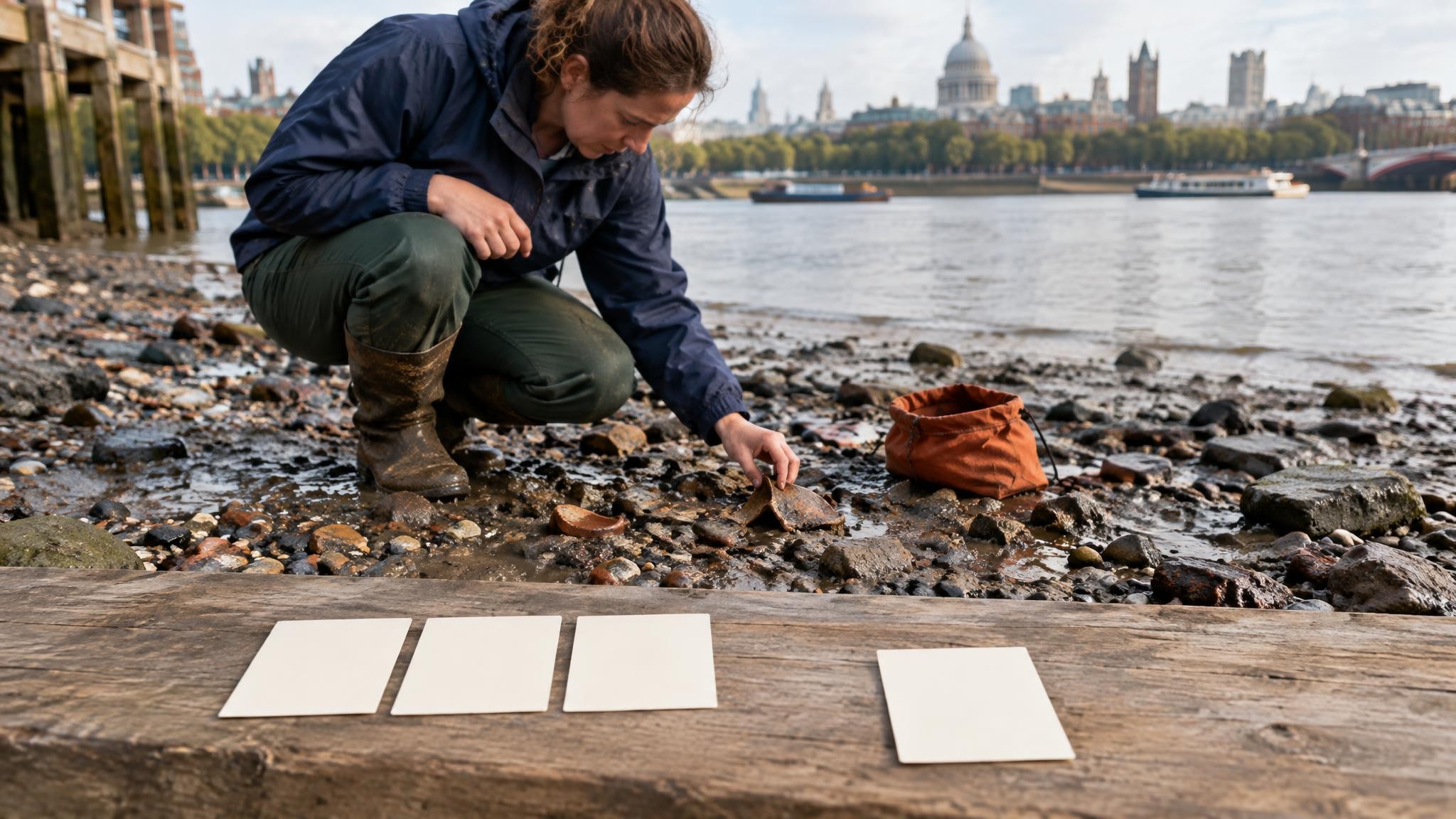
Every day, when the tide goes out, mudlarks walk down to the muddy banks of the River Thames to search for objects the river has left behind. In the past, poor Londoners searched the riverside to earn a living, picking up rope, coal and metal to sell. Mudlarking might look like a simple walk along the river, it is in fact a licensed activity with strict rules and real dangers. Many objects that date to Roman or medieval times must be reported to the Museum of London. With careful digging, a mudlark can turn a Roman coin or a medieval shoe buckle hidden in the mud for centuries. Beginners should join an experienced mudlark at first, since inexperienced walkers can easily get off by the fast-rising water. Keen collectors often track rare items using old maps and museum records. Mudlarks say the river keeps up its secrets, no matter how often the same stretch is searched. For many, the pleasure lies in the sense of with people from the past. hobbies, if any, let you hold history so directly in your hands.

Back to the exercise list

Share this exercise: Share on X Share on LinkedIn

🎬 Video walkthrough

This exercise read aloud, sentence by sentence: a pause to answer each question, the hint after the pause, then the answer and why. It gives the answers — try the exercise first.

9 min. All video walkthroughs