This exercise was made by AI and has not been reviewed by a person. How it is made

Reading Comprehension
Reading comprehension CEFR B2 Topic: Competitive memory sports and the techniques behind extraordinary recall

The Secret World of Memory Athletes

What this tests: reading for detail, opinion, attitude, purpose and what the writer implies.
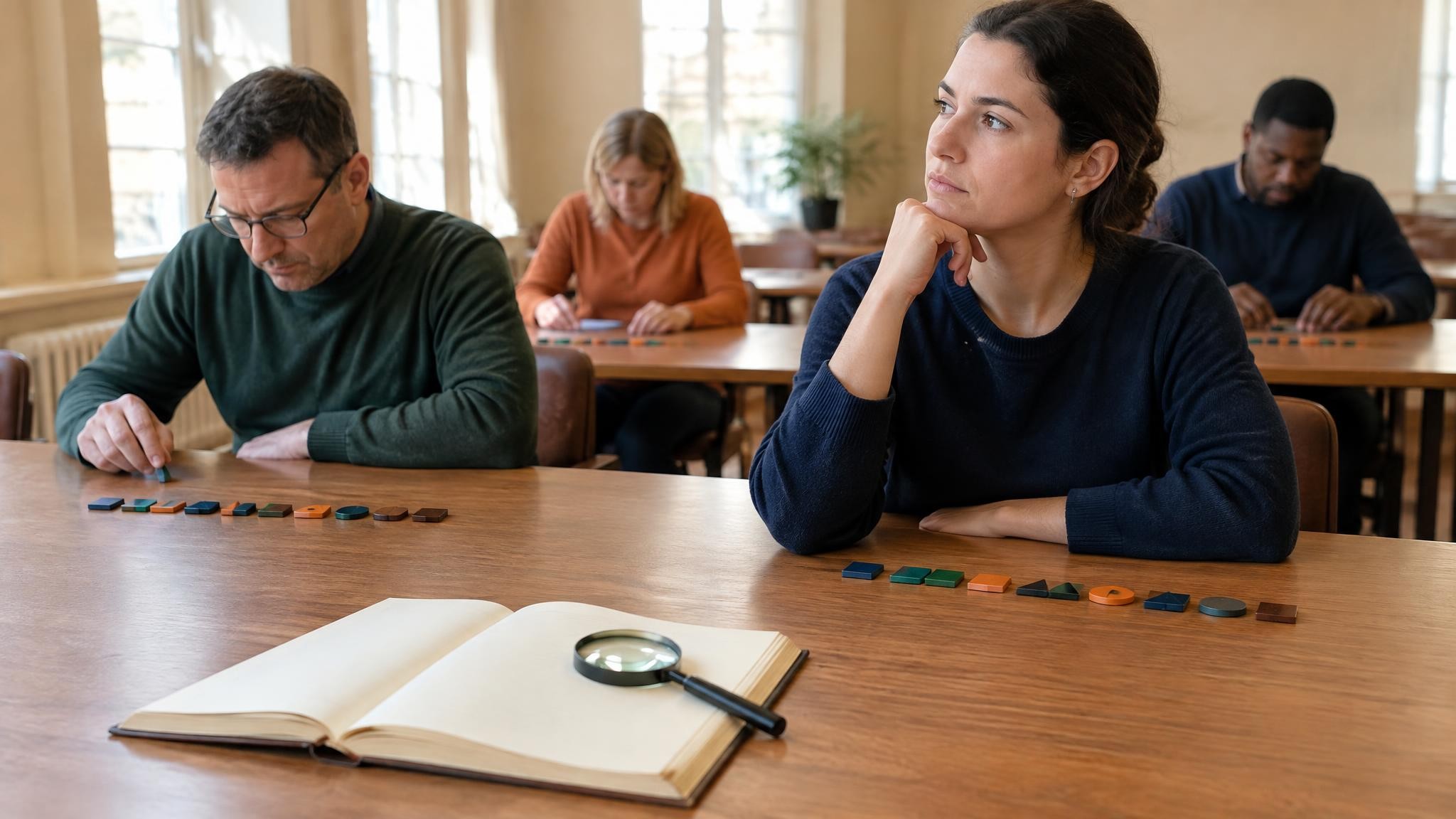
Exercise thumbnail

Instructions

Read the text carefully, then answer the six multiple-choice questions. Choose the option (A, B, C or D) that best fits according to the text.

Every spring, in a quiet conference room somewhere in the world, dozens of competitors sit in silence wearing noise-cancelling headphones and blacked-out safety glasses, staring at shuffled decks of playing cards. They are memory athletes, competing to see who can memorise the order of a deck in the shortest time, or recall hundreds of random digits after a single glance. The current world record for memorising a shuffled deck stands at under fifteen seconds, a feat many assume must depend on some rare, inborn gift.

Yet research tells a different story. When scientists examined the brains of leading competitors, they found nothing physically unusual; what set these athletes apart was years of deliberate practice with an ancient technique known as the "method of loci," or memory palace. This works by placing vivid images along a familiar mental route — the rooms of a childhood home, say — so that each image marks a piece of information in order. To memorise a sequence of cards, a competitor converts each card into a strange, memorable character and imagines it performing some bizarre action at a particular point along an imagined corridor. Recall simply means retracing that mental walk and noticing what is waiting at each stop.

What is striking is how quickly the technique can take hold. In one often-cited study, volunteers who had never competed received only forty minutes of instruction in the method, then practised half an hour daily for several weeks. Their recall improved so much that some began performing at a similar level to long-practised competitors, and scans revealed that their patterns of brain activity had begun to resemble those of champions — even though, notably, no obvious change appeared in the brain's physical makeup.

Findings like these have led a number of psychologists to question the whole notion of "photographic memory," suggesting that what looks like natural genius is frequently nothing more than the fruit of patient, systematic rehearsal. None of this means the sport is effortless: champions still devote hours daily to building and refining their palaces. But the underlying implication is oddly reassuring — this particular kind of extraordinary recall may depend far less on who you were born as, and much more on how willing you are to practise.
1. What is the main purpose of the opening paragraph?
2. According to the text, what did scientists discover when they studied top memory competitors' brains?
3. What does 'This' refer to in the sentence 'This works by placing vivid images along a familiar mental route'?
4. What was notable about the volunteers in the cited study who had no prior memory-sport training?
5. What conclusion do some psychologists draw from this research, according to the text?
6. What is the overall tone of the final paragraph towards the idea of training one's memory?

Back to the exercise list

Share this exercise: Share on X Share on LinkedIn

🎬 Video walkthrough

This exercise read aloud, sentence by sentence: a pause to answer each question, the hint after the pause, then the answer and why. It gives the answers — try the exercise first.

13 min. All video walkthroughs