This exercise was made by AI and has not been reviewed by a person. How it is made

Reading Comprehension
Reading comprehension CEFR B2 Topic: The Svalbard Global Seed Vault and global food security

The Doomsday Vault: Guarding the World's Seeds

What this tests: reading for detail, opinion, attitude, purpose and what the writer implies.
Exercise thumbnail

Instructions

Read the text about the Svalbard Global Seed Vault. Then answer the six multiple-choice questions by choosing the letter (A, B, C or D) of the best answer.

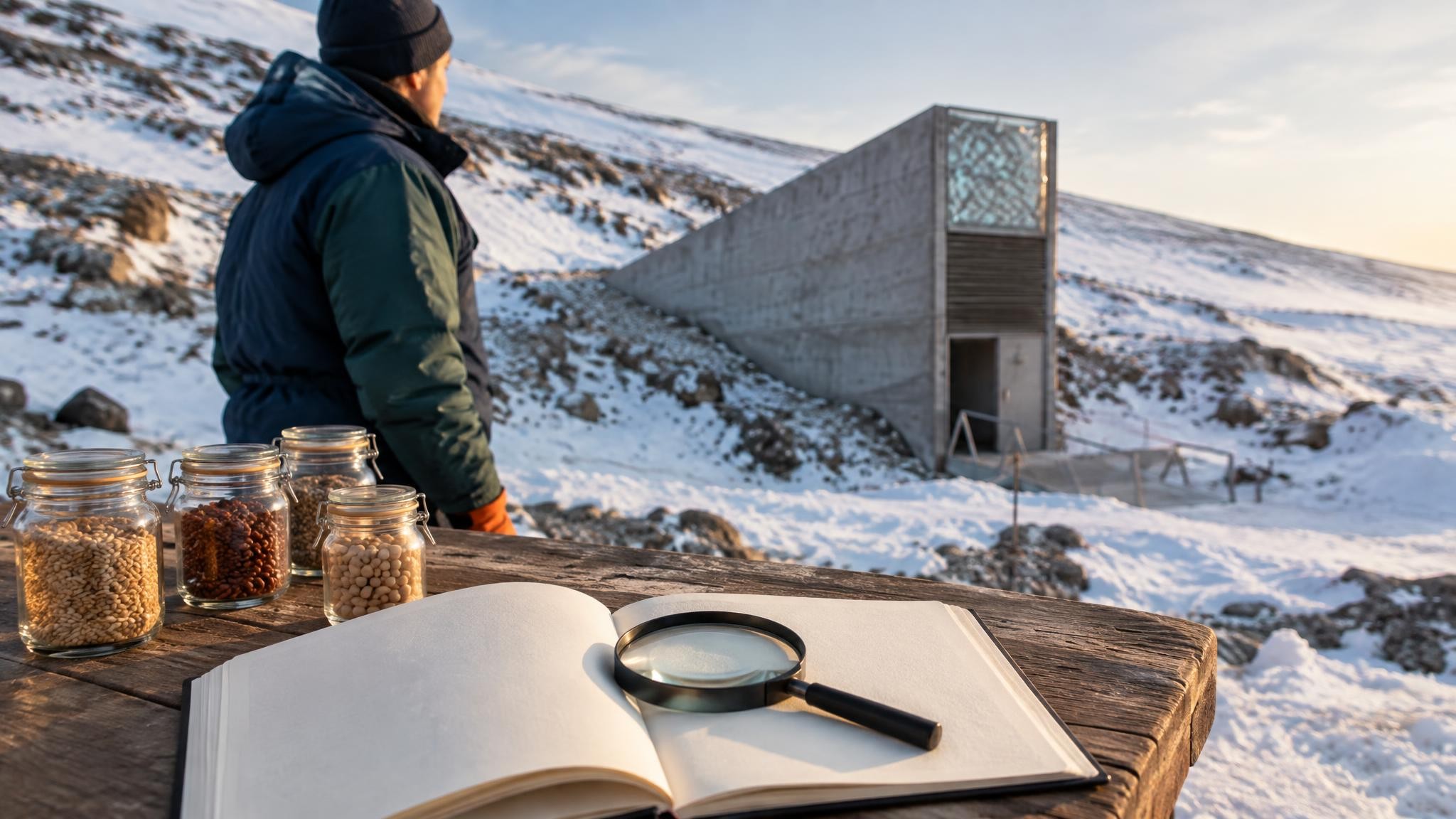
Deep inside a mountain on a remote Norwegian archipelago, roughly 1,300 kilometres from the North Pole, lies a facility with an unassuming name and an extraordinary purpose. The Svalbard Global Seed Vault, often nicknamed the "Doomsday Vault," stores duplicate samples of seeds from gene banks around the world, safeguarding the genetic diversity of the planet's food crops against war, natural disaster, equipment failure, and simple mismanagement.

The vault opened in 2008, carved into permafrost that keeps its three chambers naturally cold even if the electricity fails. Seeds are kept at around -18°C, a temperature at which many varieties can remain viable for decades, and some for centuries. Rice, wheat, barley and thousands of lesser-known crops - some no longer grown anywhere - sit in sealed foil packets inside boxes, arranged on shelves that stretch back into the rock like an enormous, frozen library.

What makes the vault remarkable is not just its scale, which currently holds over a million seed samples, but the philosophy behind it. No single country owns the seeds; depositing gene banks retain full control over their own material, and the vault simply acts as a backup, a kind of insurance policy that nobody hopes to have to claim. Yet that claim has already been made once. In 2015, researchers withdrew seeds they had deposited years earlier, after their original gene bank in Aleppo became inaccessible because of the conflict in Syria - a stark reminder that the threats the vault was built to withstand are not merely hypothetical.

Ironically, the vault's designers underestimated one danger closer to home. In 2017, unusually warm temperatures caused permafrost to melt, and meltwater seeped into the entrance tunnel. No seeds were damaged, but the incident forced engineers to waterproof the tunnel and install drainage channels, a costly retrofit that raised uncomfortable questions about relying on permafrost in a warming world.

Despite this setback, scientists remain convinced the vault is worth maintaining. Crop diversity is shrinking everywhere as farmers switch to a handful of high-yield varieties, leaving global food supplies more vulnerable to disease and climate shocks. The seeds locked away in Svalbard's rock may never be needed. But if they ever are, they could prove indispensable to feeding a hungry world.
1. According to the text, what keeps the vault's chambers cold even during a power failure?
2. What prompted the withdrawal of seeds from the vault in 2015?
3. What can be inferred from the fact that the 2015 withdrawal actually happened?
4. In the sentence 'Yet that claim has already been made once,' what does 'that claim' refer to?
5. How does the writer seem to regard the 2017 meltwater incident?
6. Why does the writer mention that farmers are increasingly relying on a small number of high-yield crop varieties?

Back to the exercise list

Share this exercise: Share on X Share on LinkedIn

🎬 Video walkthrough

This exercise read aloud, sentence by sentence: a pause to answer each question, the hint after the pause, then the answer and why. It gives the answers — try the exercise first.

13 min. All video walkthroughs